Can You Have an Allergy or Skin Reaction from Contact with Fresh Lemon Zest?
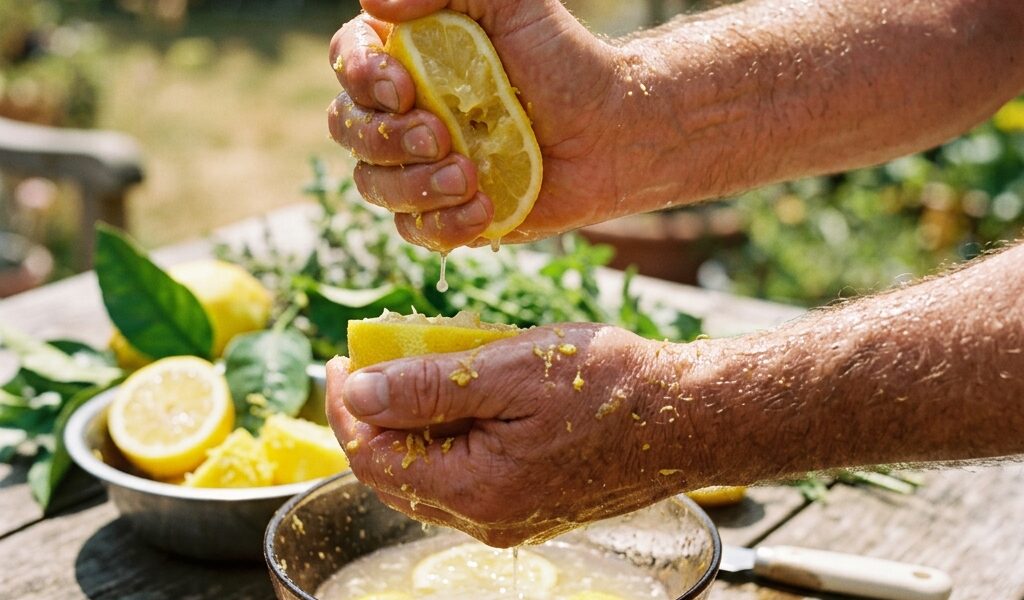
Lemons are universally considered healthy and natural. Yet a significant number of people report skin reactions from contact with fresh lemon zest: redness, burning, itching, or even pigmented patches that appear several hours after handling. These reactions often come as a surprise, as they do not correspond to a classic food allergy in the immunological sense. They are most often the result of phytophotodermatitis or contact irritation, distinct biological mechanisms whose understanding is essential to effectively prevent them.
These skin reactions are more common than one might think, particularly among professional cooks, bartenders, and people who regularly handle large quantities of citrus fruits. They can even occur in people who have handled lemons for years without any problems, as certain triggering factors can appear at any age.
Quick Answer
Yes, contact with fresh lemon zest can cause two types of reactions: phytophotodermatitis (inflammatory reaction to furocoumarins in the zest activated by UV sunlight) and irritant contact dermatitis (direct irritation by citric acid, limonene, or aldehydes on sensitive skin). True immunological allergy (IgE-mediated) to lemon is rare. Phytophotodermatitis is the most common reaction and manifests as brown pigmented patches on sun-exposed contact areas, 24 to 72 hours after handling.
Scientific Explanation
Phytophotodermatitis from citrus is a photochemical phenomenon involving plant compounds called furocoumarins, mainly bergapten (5-methoxypsoralen) and psoralen. These molecules are present in the flavedo of lemons and are transferred to the skin during zest handling. In themselves, furocoumarins are relatively unreactive at room temperature and in the absence of light. However, their tricyclic structure gives them the property of absorbing UVA photons (320-380nm wavelength) and undergoing photoexcitation to a singlet excited state. From this excited state, furocoumarins can react through [2+2] cycloaddition with pyrimidine bases of keratinocyte DNA (mainly thymine), forming covalent photoadducts that block DNA replication and induce cellular apoptosis.
This localized destruction of keratinocytes triggers an inflammatory response with activation of repair melanogenesis, leading to characteristic post-inflammatory hyperpigmentation (PIH): brown, irregularly shaped patches that correspond exactly to the areas of contact with juice or zest, appearing 24 to 72 hours after sun exposure. These pigmented spots can persist for several months. Phytophotodermatitis is not an allergy in the immunological sense: it does not involve IgE or sensitized T lymphocytes, and can affect any person if exposure conditions are sufficient.
Irritant contact dermatitis, on the other hand, is a non-immunological reaction due to the direct action of zest chemical compounds on the skin barrier. Oxidized limonene (limonene-1,2-epoxide, carvone) formed by air oxidation of limonene can be a hapten and, after repeated sensitization, can cause allergic contact dermatitis (ACD) mediated by T lymphocytes. This ACD is rarer but documented in professionals with daily exposure. Citric acid present in small amounts in the juice droplets released during zesting can directly irritate atopic skin or skin with an impaired barrier.
Hands-on Experience
I observed two typical clinical cases of phytophotodermatitis in my professional circle. The first involved a bartender who, after an outdoor summer work shift preparing cocktails on a sun-exposed terrace, developed brown, clearly defined patches on his fingers and forearms the next day, corresponding to areas splashed with juice and zest. He had noticed nothing during the evening. The patches persisted for more than two months. The second case involved a chef who developed recurrent contact dermatitis after several years of daily lemon handling, subsequently diagnosed as contact allergy to oxidized limonene by positive patch test.
Prevention is simple: wear gloves during intensive zest handling, avoid sun exposure in the hours following skin contact with lemon juice or zest, and wash hands thoroughly with soap and water after handling.
Conclusion
Skin reactions to lemon zest are real and can be debilitating, even though true IgE-mediated allergy remains rare. Phytophotodermatitis (reaction to furocoumarins + UV) is the most common cause of post-contact pigmented patches, and contact dermatitis to oxidized limonene mainly affects professionals with chronic exposure. Prevention involves wearing gloves and avoiding sun exposure after skin contact with fresh zest.