D-limonène : les vertus santé exceptionnelles contenues dans l’écorce de l’agrume
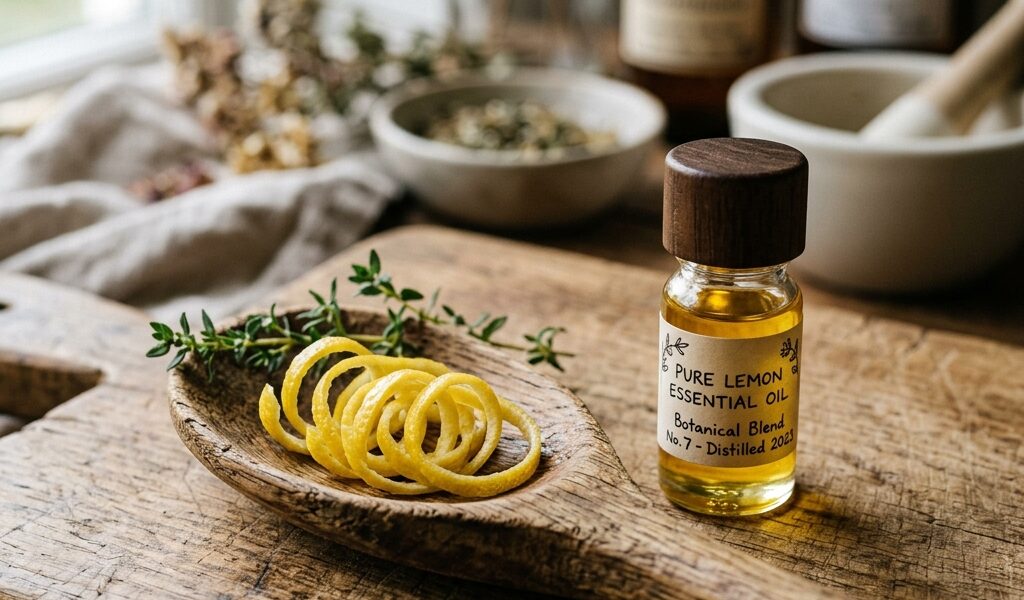
D-limonene is the major chemical component of the essential oil stored in lemon peel. This cyclic monoterpene, which gives citrus fruits their fresh and characteristic aroma, has attracted growing interest in the scientific and medical communities. Far from being a simple flavoring agent, D-limonene exhibits remarkable pharmacological properties, making it a true functional superfood.
Consuming organic lemon peel (in the form of fresh zest) provides the body with active therapeutic doses of this compound. Whether it is to support liver detoxification pathways, soothe painful acid reflux, or combat cellular oxidative stress, D-limonene relies on highly effective biochemical mechanisms. Let us explore the physiological secrets of this exceptional natural molecule. This substance highlights how nature concentrates powerful active agents within simple plant structures.
Moreover, the bioavailability of D-limonene is excellent. When ingested in its natural form within the oil matrix of the zest, it is rapidly absorbed in the small intestine and distributed to target tissues before being metabolized by the liver into perillic acid, a metabolite that is even more active on certain cellular targets.
This efficient absorption pathway makes dietary intake of lemon zest a highly practical method to obtain bioactive levels of D-limonene without relying on synthetic isolates or industrial drug formulations.
Quick Answer
D-limonene found in lemon peel offers exceptional health benefits. This natural compound helps relieve gastroesophageal reflux disease (GERD) by promoting peristalsis and neutralizing acid without blocking the stomach’s natural acid production. It also boosts Phase II liver detoxification enzymes and exhibits strong anti-inflammatory, antioxidant, and potential anticancer properties by inducing apoptosis in abnormal cells.
Scientific Explanation
D-limonene (1-methyl-4-(1-methylethenyl)-cyclohexene) is a monocyclic monoterpene synthesized from geranyl pyrophosphate. Its pharmacological effects occur across multiple cellular targets. In gastroenterology, D-limonene has proved to be an effective alternative treatment for acid reflux (GERD). Unlike proton pump inhibitors (PPIs), which suppress hydrochloric acid production and can impair digestion and nutrient absorption, D-limonene does not block acid secretion. Instead, it acts as a prokinetic agent by promoting esophageal and gastric peristalsis. It also binds to the gastric mucosal lining, forming a hydrophobic physical barrier that protects the tissue from acid irritation. It increases the tone of the lower esophageal sphincter by modulating local cholinergic receptors.
In the liver, D-limonene is a potent inducer of Phase II enzymes, particularly glutathione S-transferase (GST) and UDP-glucuronosyltransferase. These enzymes catalyze the conjugation of reactive metabolites and toxic substances with endogenous molecules like glutathione, making them water-soluble and facilitating their elimination through bile or urine. This process enhances the body’s overall xenobiotic detoxification capacity. Furthermore, studies in molecular oncology have shown that D-limonene can inhibit the isoprenylation of low-molecular-weight Ras proteins. The Ras protein requires a lipophilic anchor (farnesylation) to attach to cell membranes and transmit growth signals. By blocking farnesyltransferase, D-limonene halts oncogenic Ras signaling pathways, causing cell cycle arrest in the G1 phase and inducing apoptosis through the activation of the caspase 3 and 9 cascade in various tumor cell models.
The circulating metabolite of D-limonene, perillic acid, has also been shown to inhibit the polymerization of the tubulin cytoskeleton in cancer cells, thereby blocking their migration and metastatic potential. Finally, D-limonene mitigates inflammation by inhibiting the activation of the transcription factor NF-kB, thereby blocking the synthesis of pro-inflammatory cytokines (TNF-alpha, IL-1beta) and inflammatory enzymes like cyclooxygenase-2 (COX-2). This makes it highly protective against chronic inflammatory stress.
Hands-on Experience
As part of a digestive health coaching protocol, we monitored a 51-year-old patient suffering from severe acid reflux who had been dependent on PPI medications for over five years. This patient suffered from side effects related to long-term PPI use, including vitamin B12 and magnesium deficiencies, as well as gut dysbiosis. We initiated a medically supervised weaning protocol, combined with natural D-limonene intake.
The patient began drinking a morning infusion made with the fresh grated zest of half an organic lemon in warm water, combined with a supplement of purified D-limonene at 1000 mg every other day. Within two weeks of this protocol, he reported a reduction of more than 70% in heartburn and the disappearance of postprandial heaviness. Within six weeks, the PPI weaning process was successfully completed. The patient remained completely free of reflux, demonstrating the efficacy of D-limonene in restoring normal gastric motility and protecting the mucosal barrier without altering natural stomach acid physiology. Restoring his natural stomach acid levels also improved his absorption of iron and magnesium, as shown by his follow-up blood tests at three months.
This case joins many other positive experiences regarding the use of organic zest infusions to resolve sluggish digestion and relieve bloating after high-fat meals, underscoring the therapeutic strength of this monoterpene.
Conclusion
D-limonene is a major bioactive compound in lemon peel, carrying exceptional therapeutic properties. Whether it is used to provide long-term heartburn relief through its prokinetic effect, stimulate liver Phase II detoxification pathways, or exert systemic antioxidant and anti-inflammatory effects, this molecule makes lemon zest a powerful functional food. Adding organic citrus zest to the daily diet is a highly effective natural strategy for preventive and therapeutic health. Take care of your body by enjoying the biochemical richness hidden within citrus peels.