Lemon Essential Oil: Why It Concentrates Exclusively in the Zest
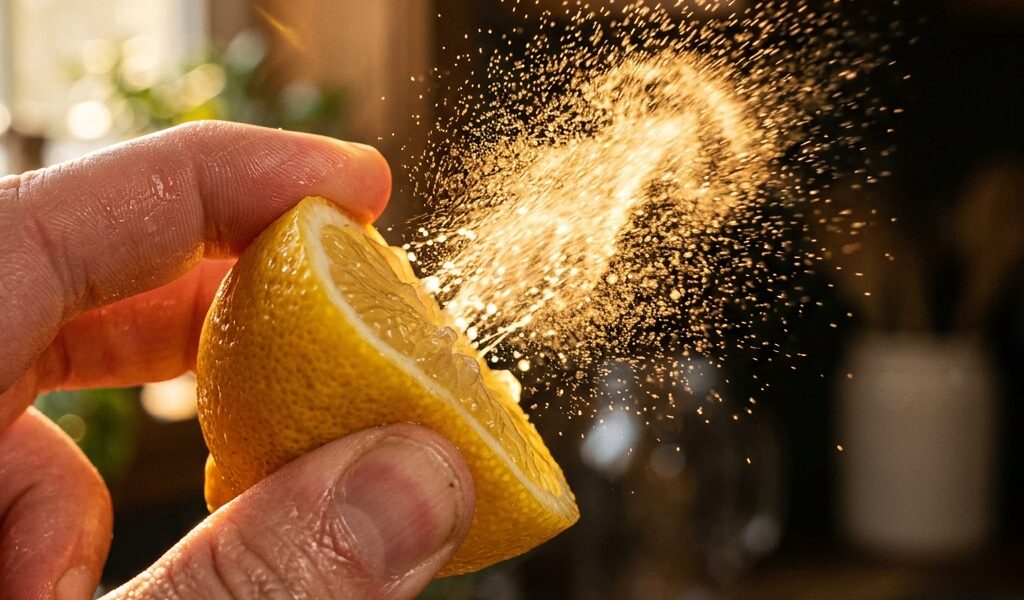
Lemon essential oil is globally renowned for its energizing scent, antiseptic properties, and wide range of uses in aromatherapy. However, if you squeeze a lemon to extract its juice, you will notice that the juice contains no trace of this precious aromatic essence. To obtain the essential oil, one must process only the peel of the fruit, specifically the zest. This is not a random occurrence, but rather the result of a strict anatomical and functional specialization within the structure of the citrus fruit.
Why did the plant choose to concentrate its most potent aromatic compounds in its outer peel rather than in its juicy flesh? The answer lies at the intersection of plant histology and evolutionary ecology. Understanding the localization and biosynthesis of lemon essential oil not only helps us appreciate this natural product but also allows us to optimize our culinary and therapeutic extraction methods. This compartmentalization is a sophisticated defense strategy developed over millions of years of evolution.
Indeed, essential oils are secondary metabolites with high adaptive value. For the plant, they do not serve to nourish its cells but to interact with its environment. Storing these highly active substances in the internal pulp would be counterproductive and toxic to the embryonic tissues of the seeds, hence their exclusive localization in the external physical barrier of the flavedo.
This biological division ensures that the internal seeds develop in a stable, watery environment while the external peel takes on the role of a chemical shield, repelling pests and blocking cellular pathogens before they can reach the interior.
Quick Answer
Lemon essential oil concentrates exclusively in the zest because it is synthesized and stored in specialized secretory cavities within the flavedo (the colored outer layer of the peel). These glands serve a biological role to defend the fruit against external threats such as insects, fungi, and UV radiation. The juice is stored in the juice sacs of the endocarp, which are designed to store water and nutrients, with no chemical link to the lipid phase of the essential oil.
Scientific Explanation
From an anatomical and histological standpoint, citrus fruits are classified as hesperidia. The fruit wall, or pericarp, is divided into three distinct layers: the exocarp (flavedo), the mesocarp (albedo), and the endocarp (the juicy pulp). Essential oil synthesis occurs exclusively within the flavedo. During fruit development, epidermal cells differentiate to form schizogenous secretory cavities. These cavities are oval-shaped pockets lined with secretory cells that release their secondary metabolites into a central space via partial autolysis of the cells. The internal pressure in these pockets is high, which explains the sudden release of micro-droplets of oil when bending the peel.
On a biochemical level, lemon essential oil is a complex mixture of hydrophobic volatile compounds. The primary constituents are monoterpene hydrocarbons, chiefly D-limonene (60 to 70%), beta-pinene, and gamma-terpinene, along with monoterpene aldehydes like citral (geranial and neral), which give lemons their characteristic scent. The biosynthesis of these terpenes takes place via the methylerythritol phosphate (MEP) pathway in the plastids of the flavedo’s secretory cells, controlled by specific enzymes known as terpene synthases. This process is highly dependent on light and external environmental triggers.
It is important to distinguish cold-pressed lemon essence, which contains furanocoumarins like bergapten, from steam-distilled essential oil. Bergapten is a phototoxic molecule that can intercalate into DNA when exposed to UVA rays, causing phototoxic skin reactions (phytophotodermatitis). Steam distillation removes these heavy, non-volatile compounds but alters the fresh aroma of the monoterpenes.
In contrast, the juice vesicles in the endocarp develop from multicellular hairs originating from the inner epidermis of the carpel wall. These vesicles accumulate water, organic acids (mainly citric and malic acids), and soluble sugars. There is no vascular connection or transport mechanism for hydrophobic secondary metabolites between the secretory flavedo and the watery endocarp. This is why fresh lemon juice contains no dissolved essential oil, unless vigorous mechanical squeezing ruptures the oil glands of the zest, causing the oil to emulsify into the juice.
Hands-on Experience
During a distillation and aromatic formulation workshop I led for perfume industry professionals, we conducted a comparative test to illustrate this anatomical separation. We prepared two separate infusions: the first using 100 ml of pure filtered lemon juice, and the second using 10 g of finely chopped organic lemon zest, both steeped in water at 80°C for 10 minutes.
The sensory and chromatographic analysis showed completely different profiles. The juice infusion was highly acidic but had very little volatile aroma, lacking the characteristic freshness of the fruit. The zest infusion, though not acidic, released a powerful and complex scent of fresh lemon. On the surface of the zest infusion, tiny droplets of essential oil were visible, floating on the water due to their low density and hydrophobic nature. This practical test confirms that to capture the aromatic profile and volatile active compounds of the lemon, you must use the zest, as the juice only provides citric acid acidity. The participants saw firsthand how mechanical processing affects the presence of oil in the end product.
We also tested the antiseptic properties of both phases: only the essential oil drops recovered from the zest infusion showed a significant zone of bacterial inhibition on agar plate cultures, whereas the filtered juice only had a temporary bacteriostatic effect due to its low pH.
Conclusion
The exclusive concentration of essential oil in lemon zest is the result of strict cell specialization within the citrus pericarp. The flavedo acts as a protective chemical factory containing glands that secrete hydrophobic terpenes, while the endocarp acts as a reservoir of acidic water. To harness the antiseptic, aromatic, and stimulating benefits of lemon essence, one must target the zest using cold mechanical extraction methods, leaving the juice to its role as a liquid acidifier. Respecting this plant anatomy is the key to unlocking the true benefits of citrus fruits.