Huile d’olive infusée au zeste de citron : la recette sûre sans risque de botulisme
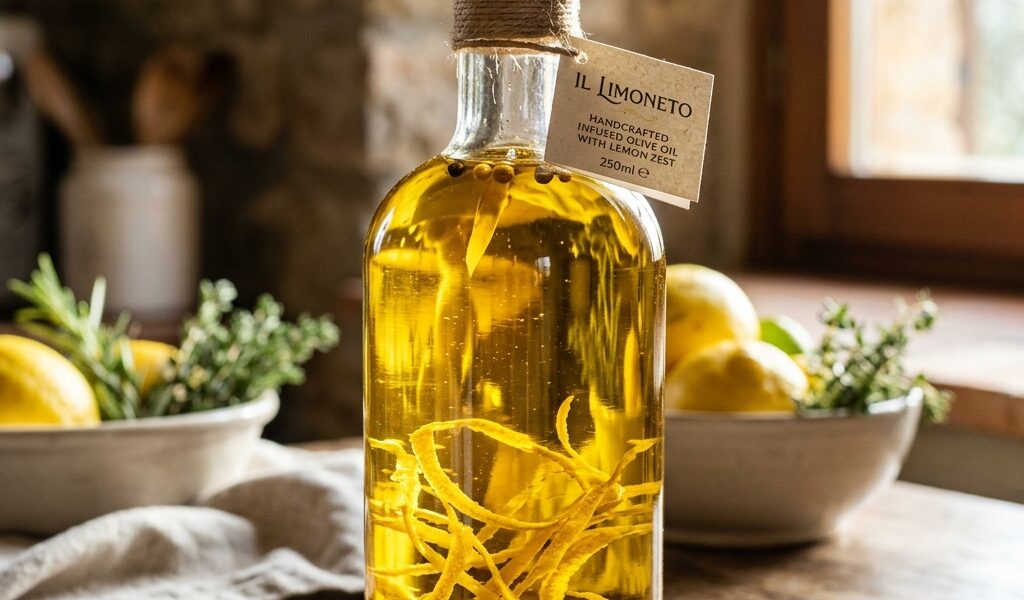
Olive oil infused with lemon zest is a gastronomic condiment of remarkable versatility and elegance. It can elevate a salad, flavor a fish dish, enhance a risotto, or serve as the base for a sophisticated vinaigrette. However, the preparation of infused oils based on fresh ingredients (including lemon zest) raises a serious food safety question that is too often overlooked: the risk of food botulism.
Clostridium botulinum is a strictly anaerobic bacterium (which proliferates in the absence of oxygen) capable of producing botulinum toxin, one of the most powerful biological toxins known. Oil is an anaerobic medium by definition, and fresh plant materials (zest, herbs, garlic) can harbor C. botulinum spores. If these preparations are poorly made, poorly stored, or consumed too late, the risk of botulinum poisoning is real. Understanding this risk and the means to eliminate it is essential for preparing a lemon zest oil that is both delicious and absolutely safe.
Quick Answer
To prepare a lemon zest infused oil without botulism risk, use exclusively DRIED zest (not fresh): either by oven-drying the grated zest at 50°C for 1.5 hours, or by using commercial dried organic lemon zest. Dried zest (moisture below 10%) does not allow C. botulinum spore germination because the water activity is too low. Dried zest oil can be stored for 3 to 6 months at room temperature away from light. Fresh zest in oil must be consumed within 24 hours and stored in the refrigerator.
Scientific Explanation
Clostridium botulinum is a spore-forming Gram-positive anaerobic bacillus, classified into several sero-typic groups (A, B, C, D, E, F, G) based on the type of toxin produced. C. botulinum spores are ubiquitous in agricultural soils and can be found on the surface of citrus fruits, particularly those untreated after harvest. These spores are extremely resistant to heat (they require sterilization at 121°C for 3 minutes in an autoclave to be destroyed) and to moderate desiccation.
The specific danger of infused oils based on fresh ingredients lies in the combination of three factors: the strict anaerobiosis of the oily medium (very negative Eh), the presence of C. botulinum spores on the surface of fresh plant materials, and a neutral to slightly acidic pH (pH > 4.6 in oils without sufficient acidification). These three conditions together allow spore germination into vegetative forms, bacterial proliferation, and the production of type B botulinum neurotoxin (the most common in Europe). Botulinum neurotoxin is a zinc metalloprotease (thiol-dependent protease) that specifically cleaves SNARE proteins (SNAP-25, VAMP/synaptobrevin) at the neuromuscular junction, blocking acetylcholine release and causing descending flaccid paralysis that can be fatal.
The solution to the botulism risk in infused oils involves controlling water activity (Aw). C. botulinum spores cannot germinate at an Aw below 0.93-0.94. Fresh zest (Aw > 0.98) represents a high-risk substrate. Oven-dried zest down to an Aw below 0.70 is microbiologically safe for infusion in oil, even at room temperature for several months.
Hands-on Experience
In professional food hygiene training, I systematically emphasize this point with restaurant trainees. The confusion between natural and safe is very widespread: many people think that homemade lemon oil with fresh zest is harmless because lemon is naturally acidic. This is a mistake: the pH of the oil is not changed by fresh zest, which represents less than 5% of the total volume and whose acidity is diluted in the fat. My safe professional recipe: organic lemon zest dried at 50°C for 2 hours, completely cooled, incorporated into quality extra-virgin olive oil at a ratio of 20g dried zest per 500ml oil, macerated for 7 days away from light, strained through a fine sieve. Storage: 3 to 4 months away from heat and light.
Conclusion
Olive oil infused with lemon zest is a magnificent gastronomic condiment whose safe preparation is governed by a simple rule: use only perfectly dried zest to eliminate the risk of botulism. This scientifically grounded precaution does not compromise the aromatic quality of the final product, as low-temperature drying preserves the majority of the flavedo’s essential oils. Safety and flavor are not incompatible, as long as you understand the basic microbiology of preservation in anaerobic environments.