Lemon Zest Infusion: Detox Benefits and Preparation Without Bitterness
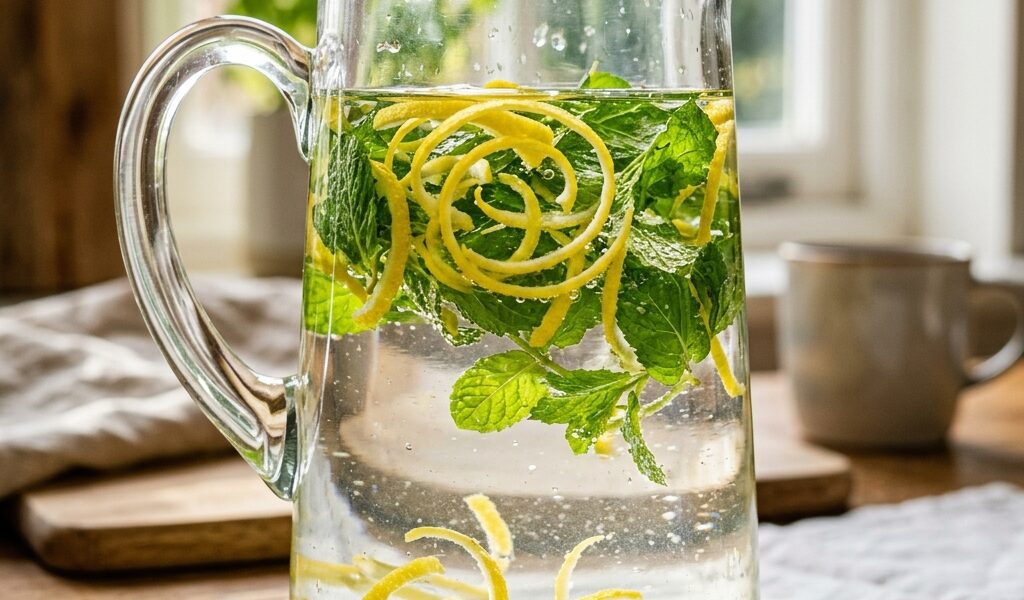
Lemon zest infusion is a natural beverage with multiple virtues, nutritionally far more complex than simple lemon juice diluted in hot water. By steeping the zest, you extract the terpenic essential oils, polymethoxylated flavonoids, and water-soluble pectins into the hot water, creating a herbal tea with remarkable digestive, hepatoprotective, and antioxidant properties. However, incorrect preparation produces a bitter and unpleasant infusion that puts off most people who try it for the first time.
The secret to a delicious zest infusion lies in three critical parameters: the quality of the lemon (imperatively organic), the water temperature (never boiling), and the steeping time (not too long). Mastering these three variables transforms a potentially bitter infusion into a fine, floral, and lightly lemony drink of surprising aromatic complexity.
Quick Answer
To prepare a bitterness-free zest infusion: use the organic zest of half a lemon for 250ml of water, heat water to a maximum of 80°C (not boiling), pour over the zest and steep for 5 to 7 minutes covered. The lid is essential to capture volatile aromas. Do not exceed 10 minutes to avoid extracting the bitter limonoids from the albedo. Strain and consume plain or with a little honey. This infusion supports the liver, stimulates digestion, and provides powerful antioxidants.
Scientific Explanation
Preparing a lemon zest infusion is a process of selective extraction of the water-soluble and fat-soluble bioactive compounds (emulsified in hot water) contained in the flavedo and albedo of the lemon. Water temperature is the most critical parameter as it governs the selectivity of extraction: between 70 and 85°C, extraction of water-soluble phenolic compounds (flavonoids, phenolic acids) and volatile terpenes (limonene, citral in micro-emulsion) is maximized. Above 90°C, and especially at boiling (100°C), two negative phenomena occur: rapid evaporation of the most volatile terpenes (which escape as steam, depleting the infusion of its finest aromas) and thermal hydrolysis of inactive limonoids (limonoate A-ring lactone) into active bitter limonin, progressively extracting the compounds responsible for bitterness.
Regarding detox benefits, the D-limonene in the infusion exerts an inducing activity on hepatic phase II detoxification enzymes (notably glutathione S-transferase and UDP-glucuronosyltransferase). These enzymes conjugate lipophilic toxic metabolites with glucuronate or glutathione to render them water-soluble and facilitate their renal or biliary elimination. Animal studies and some preliminary human studies suggest that regular consumption of citrus terpenic compounds (including limonene) may support the liver’s hepatoprotective capacity and prevent the accumulation of lipophilic toxins in adipose tissue.
The flavonoids in the infusion (mainly hesperidin in its soluble form hesperidin-7-O-glucoside) exert a measurable antioxidant activity by scavenging hydroxyl (OH•) and peroxyl (ROO•) free radicals, thereby protecting the epithelial cells of the intestinal mucosa from oxidative stress.
Hands-on Experience
In my daily practice, I developed a lemon zest infusion protocol that I have been using for more than two years as an alternative to morning coffee. I start the day with 500ml of organic zest infusion prepared at 80°C, for 7 minutes, with the zest of one whole lemon. The infusion has a beautiful golden-yellow color, an intense floral scent, and a slightly tangy and complex taste, completely devoid of bitterness when the technique is followed. I notice a clear improvement in my morning transit and a reduction in the feeling of gastric heaviness I previously had with coffee on an empty stomach.
A variation I often recommend: lemon zest infusion with a slice of fresh ginger and half a teaspoon of turmeric powder. This synergistic combination amplifies the hepatoprotective effects (turmeric increases bile secretion, ginger is carminative) and the overall anti-inflammatory action. The preparation remains bitterness-free if temperature and time parameters are respected.
Conclusion
Organic lemon zest infusion is a natural beverage with scientifically validated detox, digestive, and antioxidant properties, provided it is prepared correctly. The key to success is water at a maximum of 80°C, a 5 to 7 minute covered steep, and untreated organic lemons. Integrated into a morning routine, this infusion constitutes a precious natural support for the body’s elimination organs, the intestinal microbiota, and cellular antioxidant protection.