Should You Add Lemon Zest Before or After Baking in Your Cakes?
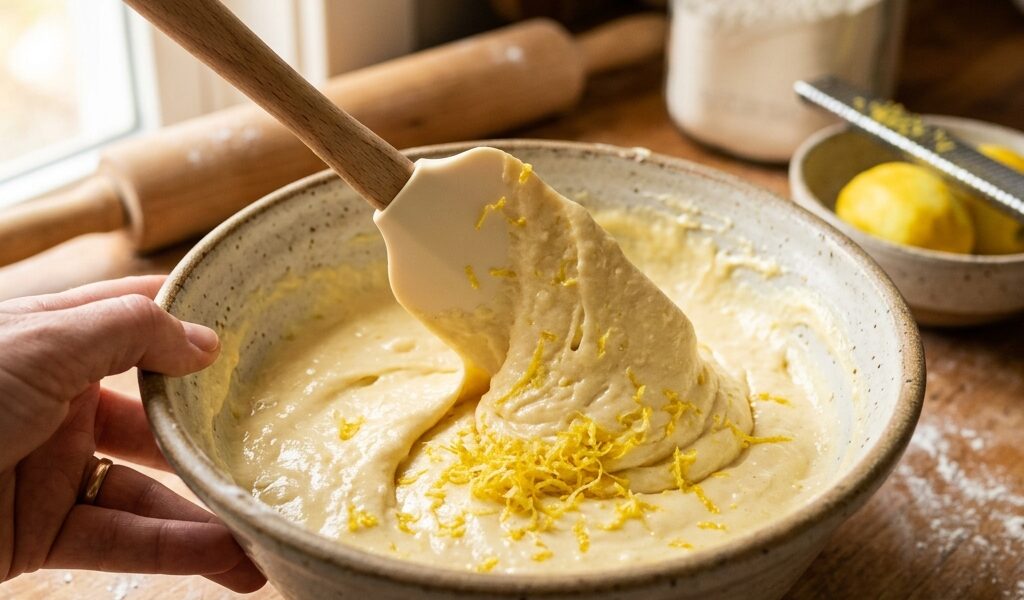
Among the baking mysteries that divide enthusiasts and professionals, the question of when to add lemon zest holds a special place. Should you incorporate the zests directly into the cake batter before it enters the oven, or is it preferable to add them after baking, in the form of decoration, a late infusion, or within a glaze? Some argue that heat destroys the subtle fragrance of the lemon, while others claim that baking is essential to diffuse the aromas throughout the crumb. This question actually relates to the physics of aromas and the thermodynamics of baking. To achieve the perfect lemon cake, which exhales both the freshness of the citrus and a deep fruity taste, one must not choose at random.
Lemon zest does not behave like an inert flavoring. It contains cells filled with volatile essential oils that react strongly to temperature, humidity, and fats present in the batter. Understanding how these aromatic compounds interact with the structure of the cake during baking makes it possible to optimize the final sensory experience. We will scientifically analyze the behavior of zests under the effect of heat to determine the ultimate flavoring method.
Quick answer
For a lemon cake with maximum aromatic intensity, it is best to adopt a two-stage strategy: incorporate 70% of the zests before baking by rubbing them vigorously with the recipe’s sugar to release and trap the aromas in the fats, then add the remaining 30% after baking, integrated into a warm soaking syrup or a cold citrus glaze. Baking allows the development of warm, complex, and candied lemon notes, while adding zest after baking preserves the highly volatile and heat-sensitive molecules (citral) that provide immediate freshness and punch in the mouth.
Adding zest only before baking leads to an inevitable loss of fresh top notes through evaporation. Conversely, adding it only after baking yields a superficial, acidic lemon flavor that is dissociated from the cake crumb. Combining both methods, known as double impregnation, is the secret of pastry chefs to achieve a three-dimensional and persistent aromatic profile.
The Scientific Explanation
The behavior of lemon zest during the baking of a cake (generally between 150°C and 180°C) is governed by the thermodynamics of volatile organic compounds. Lemon essential oil is mainly composed of monoterpenes, including d-limonene (the most abundant) and citral (a mixture of geranial and neral). During oven baking, two major physical phenomena occur: thermal degradation and steam distillation (or hydrodistillation).
The water contained in the cake batter begins to evaporate under the effect of heat, creating water vapor bubbles that make the cake rise. Unfortunately, this moving steam carries along the hydrophobic aromatic molecules of the lemon, even though their individual boiling points are high (176°C for limonene). This steam distillation phenomenon literally strips the cake crumb of its most volatile top notes, especially the highly heat-sensitive citral. Furthermore, at high temperatures, citral undergoes thermal degradation by oxidation and cyclisation, transforming into less fragrant compounds or exhibiting slightly soapy notes.
To counteract this aromatic loss, culinary biochemistry suggests two solutions. The first is lipid encapsulation. The terpenes in the zest are lipophilic molecules. By rubbing the zests in granulated sugar before creaming with butter, the flavedo pockets are mechanically torn open. The released essential oil is immediately adsorbed by the sugar crystals, then dissolves in the butter lipids during mixing. Fats form a protective barrier: the partition coefficient of terpenes is highly favorable to lipids, which considerably slows their evaporation during baking and protects the molecules from thermal degradation. The second solution consists of introducing raw zest after baking. The citral is then subjected to no thermal stress. It keeps its geometric structure intact, offering the consumer the characteristic sharp, citrusy, and slightly herbal olfactory shock of fresh lemon.
Practical feedback
We designed a rigorous comparative experiment in our workshops to evaluate the impact of the timing of zest incorporation on the organoleptic qualities of a classic travel cake (pound cake type).
We prepared four identical cakes using the zest of two organic yellow lemons per cake, distributed according to the following protocols:
Batch A (Zests incorporated only before baking, mixed into the batter at the end): The cake had a beautiful color and a uniform crumb. The lemon fragrance was pleasant but discreet, lacking vivacity. The notes were rather warm and recalled cooked marmalade.
Batch B (Zests rubbed with sugar before baking, then creamed with butter): The cake was more fragrant than Batch A. The crumb offered a well-integrated lemon flavor with a very soft texture. Rubbing the sugar allowed excellent distribution of the aromas in the fat, but the refreshing kick of fresh lemon at the end of the mouth was still lacking.
Batch C (Zests added only after baking, sprinkled on the hot cake right out of the oven): The nose was extremely flattering and powerful right out of the oven. However, after cooling, the zests on the surface had dried, becoming unpleasant under the teeth (paper-like sensation). Furthermore, the inside of the cake had no lemon flavor, creating an unbalanced contrast between the fragrant exterior and the neutral interior.
Batch D (Zests in double delivery: 70% rubbed in sugar before baking, and 30% infused in a warm soaking syrup applied to the warm cake after baking): This batch won the unanimous approval of the tasters. Soaking with the lemon syrup (juice, sugar, and fresh zests infused briefly warm) helped diffuse the fresh and punchy aroma of raw lemon inside the cake while maintaining the rich structure and cooked background note provided by the baked zests. The cake was intensely fragrant, moist, and of incomparable freshness.
Conclusion
Determining whether to add lemon zest before or after baking is no longer a dilemma: the answer is both. For an optimal result worthy of the greatest chefs, double impregnation remains the reference method. It makes it possible to combine the aromatic depth of baking with the volatile vivacity of the fresh fruit, offering the best lemon cake possible.