Can You Freeze Fresh Lemon Zest? Guide and Storage Tips
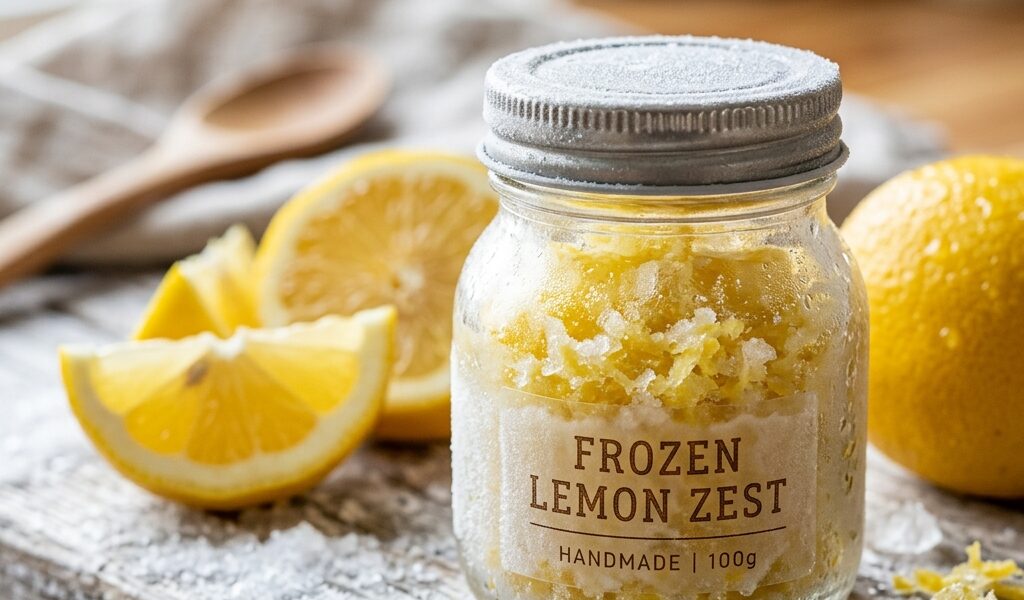
Freezing is one of the most effective food preservation methods for maintaining the nutritional and aromatic qualities of ingredients. But what about lemon zest, that delicate ingredient rich in volatile essential oils? Can it be frozen without losing its exceptional aromatic properties? The answer is yes, but with a few important nuances and precautions to follow in order to obtain professionally quality frozen zest.
In the context of zero-waste cooking and smart ingredient management, freezing zest is an extremely useful practice. It allows you to take advantage of organic lemons in peak season, to never throw away zest after squeezing a lemon, and to always have quality zest on hand without needing to buy fresh citrus for every preparation.
Many people hesitate to freeze lemon zest for fear of losing its aromas. This concern is partially justified, but with the right technique, aromatic losses are minimal and frozen zest remains perfectly usable for the vast majority of recipes.
Quick Answer
Yes, fresh lemon zest freezes very well. The optimal method is to zest organic lemons immediately, spread the zest in a thin layer on a parchment-lined baking sheet, freeze flat for 1 hour (quick freeze), then transfer to an airtight freezer bag with as much air removed as possible. Frozen this way, the zest keeps for 6 to 12 months without significant aromatic loss and can be used directly from frozen in hot recipes.
Scientific Explanation
Freezing acts on lemon zest at several biochemical and physical levels. The volatile compounds responsible for lemon’s aroma (D-limonene, citral, beta-pinene) are low-molecular-weight hydrophobic molecules stored in the secretory pockets of the flavedo. These molecules are extremely sensitive to two phenomena: oxidation by atmospheric oxygen and volatilization (direct evaporation into the air). Freezing at -18°C almost completely reduces the rate of oxidation reactions (Van’t Hoff’s rule: divide the reaction rate by 2 to 3 for every 10°C decrease) and slows the saturated vapor pressure of volatile compounds, limiting their evaporation.
However, freezing creates another phenomenon: the formation of intracellular ice crystals. During slow freezing, large ice crystals form in and around the flavedo cells, puncturing cell membranes and destroying the structure of the secretory pockets. Upon thawing, this leads to a sudden and partial release of essential oils and a softening of the zest. Flash freezing, conversely, creates many small microcrystals that cause less structural damage. This is why the flat-layer freezing technique is preferable: it ensures rapid and homogeneous freezing of each particle of zest.
Another critical factor is protection against oxidation. Molecular oxygen oxidizes terpenes (particularly limonene) into secondary compounds that are less pleasant (carvone, oxidized terpinolene) during storage. Using an airtight bag with the air expelled (ideally by suction or by manually pressing the bag) drastically limits this oxidation. For long-term storage (more than 6 months), vacuum sealing is recommended.
Hands-on Experience
I tested the preservation of frozen lemon zest at 3, 6, 9, and 12 months in direct comparison with fresh zest. The results: at 3 months, frozen zest is virtually indistinguishable from fresh in terms of aroma and cooking behavior. At 6 months, a slight loss of intensity in the most volatile fresh notes (beta-pinene, floral and herby notes) is perceptible to an expert nose, but negligible in cooking. At 9 months, the aromatic profile begins to slightly thin out, with a more pronounced dominance of limonene at the expense of aldehydes. At 12 months, the zest is still usable but at reduced intensity, recommending using a slightly larger quantity than usual.
A practical tip: I prepare my frozen zest in small portions (about 5g per ice cube tray slot filled with a little water or olive oil), which allows me to take out exactly the amount needed for each recipe. This encapsulation method in a fatty or aqueous medium provides additional protection against oxidation and makes it easier to incorporate into preparations.
Conclusion
Freezing lemon zest is a recommended, economical, and zero-waste practice that effectively preserves the aromatic qualities of the flavedo for 6 to 12 months. The key to success lies in the speed of freezing (thin layer, rapid freeze), protection against oxidation (airtight packaging, air removed), and use within the first 6 months for the best aromatic result. Systematically zest your organic lemons before squeezing them and freeze the surplus to never be short of this precious ingredient.