Lemon Zest Powder: How to Make This Natural Flavor Enhancer
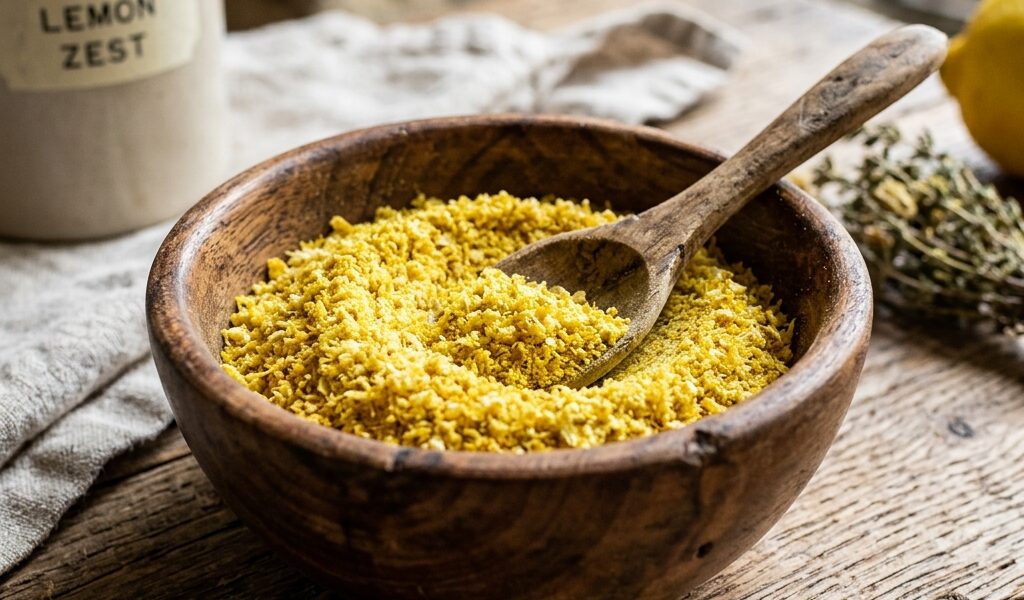
The search for natural ingredients capable of enhancing flavors without resorting to chemical additives is a priority in modern gastronomy. Among these culinary treasures, lemon zest powder stands out as an exceptional flavor enhancer. A true aromatic concentrate, this fine, golden powder allows the pure and vibrant scent of the citrus fruit to be integrated into a multitude of sweet or savory preparations, without adding any moisture or acidity. Moreover, its production fits perfectly within an eco-friendly and anti-waste framework, by reclaiming lemon peels after using the juice. However, transforming a fresh and wet peel into a stable, highly aromatic powder requires mastering the physical parameters of dehydration and storage to prevent the loss of highly volatile essential oils.
Making your own lemon zest powder is not simply a matter of letting peels dry on a corner of a table. Poorly managed dehydration or inappropriate grinding can destroy delicate aromatic molecules or promote oil oxidation, giving the powder a taste of old hay or varnish. By understanding the thermodynamic mechanisms of low-temperature drying and the stabilization of the citrus fruit’s secondary metabolites, you will be able to produce a professional-quality powder capable of maintaining its olfactory potency for several months.
Quick answer
To make lemon zest powder, grate only the flavedo (the colored yellow part) of well-washed organic lemons. Spread these zests on the rack of a dehydrator or on a baking sheet lined with parchment paper. Dry at a very gentle temperature, ideally between 40°C and 45°C (never exceed 50°C) for 8 to 12 hours until the zests are completely brittle under your fingers. Let them cool, then grind them finely using a clean spice grinder or coffee grinder. Immediately store the resulting powder in an airtight glass jar, kept away from light, heat, and humidity.
Respecting the thermal limit of 50°C during drying is the most critical point of this recipe. Above this temperature, volatile essential oils evaporate massively and the aromatic molecules undergo irreversible thermal degradation. A zest dried too quickly or too hot will lose its bright yellow color, turn brown, and have only a weakened and altered fragrance.
The Scientific Explanation
The drying of lemon zest is a physical dehydration process governed by the laws of mass and heat transfer. The primary objective is to reduce the water activity (denoted as aw) of the plant tissue. Water activity measures the availability of free water for chemical and biological reactions. To ensure microbiological stability and stop enzymatic reactions (such as those of polyphenol oxidase which cause browning), aw must be lowered below 0.3. At this level, the remaining water is so tightly bound to macromolecules (pectin, cellulose) that no bacteria, yeast, or mold can grow, and oxidation reactions are considerably slowed down.
The main challenge of dehydrating citrus fruits lies in preserving the volatile molecules that make up the essential oil, mainly d-limonene and citral. Although d-limonene has a high boiling point of 176°C at atmospheric pressure, its vapor pressure is high at room temperature, meaning that it evaporates easily by simple gas diffusion. Drying must therefore be conducted according to a kinetic compromise: a temperature high enough to evaporate water (which boils at 100°C but evaporates at any temperature) but low enough to limit the vapor pressure of monoterpenes and prevent their entrainment by circulating hot air. At 45°C, the diffusion rate of water to the surface remains higher than that of limonene, which allows the plant matrix to dry while encapsulating the oils within the secretory channels shrunken by dehydration.
Once dry, lemon zest powder has a very large specific surface area, making it extremely sensitive to photo-oxidation and autoxidation. In the presence of oxygen and under the influence of photons (light), d-limonene undergoes radical chain reactions. It oxidizes into hydroperoxides, which then degrade into carvone, carveol, and limonene oxide. These oxidation molecules have odors of rancid peppermint, cut grass, and chemical solvent, ruining the fresh profile of the citrus fruit. This is why storage must be done in an amber or opaque glass container, under vacuum or with an oxygen absorber if possible, to stop the autoxidation kinetics. Furthermore, because the powder is hygroscopic due to its dry pectin content, it rapidly absorbs ambient moisture, which causes clumping (caking) and restarts enzymatic activity.
Practical feedback
We conducted several tests in our experimental kitchens to compare the impact of drying and grinding methods on the olfactory quality and texture of lemon zest powder.
For the first test, we used a domestic oven set to its minimum temperature, which was 80°C (the usual method advised on many cooking blogs). After only 3 hours, the zests were dry but had a dark yellow, almost brownish color. After grinding, the resulting powder gave off a smell of cooked, caramelized lemon, with very pronounced metallic notes. Integrated into shortbread cookies, it lacked freshness and vivacity. This test demonstrated that classic non-ventilated ovens or ovens set too hot are unsuitable.
For the second test, we used a food dehydrator equipped with horizontal airflow, set at 40°C for 10 hours. The zests emerged bright yellow, perfectly rigid and brittle. Grinding in a spice grinder produced an exceptionally fine powder. The aroma was of absolute clarity, faithfully restoring all the floral and lemony top notes of the fresh fruit. This is the reference method.
In a third test, we explored the culinary applications of this fine powder. We tested it as an aromatic agent in macaron shells (where moisture is the number one enemy of the foot). Incorporating 3 grams of lemon zest powder into the powdered sugar of the recipe made it possible to obtain intensely flavored macarons without disrupting the drying (macaronage) of the batter, something impossible to achieve with fresh wet zests or juice. We also created a “dried lemon fleur de sel” blend (90% salt, 10% powder). Unlike using fresh zest which wets the salt and melts it, the dry powder mixed perfectly, creating a stable, dry, and intensely fragrant condiment, ideal for seasoning fish at the end of cooking.
Conclusion
Lemon zest powder is an incredibly effective ingredient for bakers looking to concentrate flavors without altering the wet texture of their batters. Its success relies entirely on slow drying below 50°C and strict airtight storage away from light. Easy to make, it values your lemon peels while providing you with an exceptional condiment for your culinary creations.