Ribbon, Grated, or Julienne Zest: Which Cut to Choose for Your Recipe?
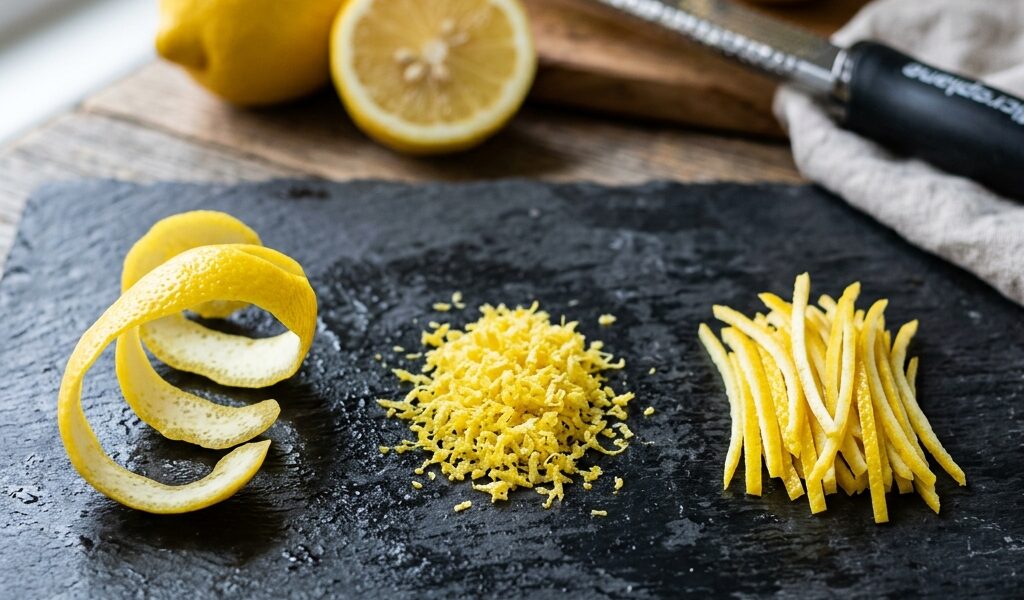
In modern culinary arts, the appreciation of citrus fruits has shifted from the simple use of their acidic juice to harnessing the rich aromatic potential of their peel. Lemon zest, in particular, contains an extraordinary concentration of volatile organic compounds capable of radically transforming the organoleptic profile of a dish. However, many cooks, whether home enthusiasts or professionals, underestimate the crucial impact of the cutting method on the release of these aromas and the final texture of the preparation. Choosing between ribbon zest (obtained with a vegetable peeler), grated zest (using a fine rasp-style grater like a Microplane), or julienne zest (cut into fine matchsticks with a knife) is not merely an aesthetic choice. It is a technical decision that determines the rate of essential oil transfer into the cooking medium, the potential bitterness from the accidental inclusion of albedo, and the physical integration of the pieces into the overall texture. This article provides a comprehensive analysis of the physicochemical dynamics associated with each type of cut to guide your culinary practices.
Quick Answer
The choice of lemon zest cut depends entirely on the aromatic release rate and the desired texture in your recipe. Grated zest is ideal for immediate and homogeneous integration into cake batters, creams, or emulsions, as breaking the cell walls instantly releases essential oils. Ribbon zest is preferred for slow infusions (broths, syrups, simmered sauces, oils) because its limited surface area prevents the extraction of bitter compounds while allowing easy removal before serving. Finally, julienne zest is best for preparations where the lemon should provide visual appeal and a pleasant chew, such as in marmalades, fish sauces (sauce meunière), or braised dishes.
Scientific Explanation
From a biochemical and histological perspective, the lemon peel is divided into two distinct zones: the flavedo (the colored outer layer) and the albedo (the white, spongy inner layer). The flavedo houses spherical secretory cavities, also known as oil glands or oleiferous glands, which contain essential oils composed of over 90% d-limonene, complemented by β-pinene, γ-terpinene, and citral (geranial and neral). Conversely, the albedo is highly rich in bitter flavonoids, notably neohesperidin and naringin, as well as insoluble pectins.
The cutting method radically alters the mass transfer kinetics of volatile monoterpenes into the food matrix. When the zest is grated using a photo-etched precision blade, the mechanical action intensively shears and tears the cell walls of the flavedo, causing the immediate rupture of almost all oil glands. The hydrophobic essential oils are instantly released as an unstable emulsion on the grater surface. This process maximizes the specific surface area (surface-to-volume ratio) and accelerates diffusion according to Fick’s first law. The absence of albedo in a well-controlled grating process avoids any contamination from bitter compounds.
In contrast, cutting the zest into ribbons preserves the global cellular structure of the flavedo. Only the glands located along the peripheral cut line are ruptured. The rest of the essential oil remains encapsulated within the intact plant tissues. The release of aromas occurs not through direct mechanical disruption, but via slow thermal diffusion through the hydrophilic cell walls during prolonged heating (maceration or culinary hydrodistillation). If the ribbon includes part of the albedo, the water-soluble bitter phenolic compounds will gradually diffuse, which can spoil the flavor if the contact time is excessive.
The julienne cut represents an intermediate compromise. It requires first removing the flavedo using a zester or a peeler, then slicing it with a knife into strips about 1 mm wide. Structural integrity is partially preserved at the center of each filament, while the cut edges provide active diffusion zones. This geometry slows down the release of volatile aromas while modifying the rheology of the food by introducing solid inclusions rich in cellulosic fibers.
Hands-on Experience
To evaluate the impact of these three cuts, I conducted a series of experiments on three reference preparations: an infused custard (a warm aqueous-lipid medium), a lemon cake (dry baking in a complex batter matrix), and an emulsified sauce for fish.
For the custard, using grated zest produced an immediate and powerful release of aromas during the first few minutes of heating. However, after 15 minutes of gentle cooking, the volatile top notes (citral) had mostly evaporated due to the heat, leaving a flat flavor profile. Additionally, the micro-particles of zest ruined the smooth appearance of the custard. Infusing ribbon zest (free of albedo) for 20 minutes yielded the optimal result: a subtle, deep flavor, without any solid residue after straining, and a remarkable preservation of the fresh citrus top notes.
For the lemon cake, integrating grated zest previously rubbed into the granulated sugar (the scented sugar technique) solubilized the d-limonene directly into the fats of the butter during creaming. Upon tasting, the cake exhibited a consistent and intense lemon flavor in every bite. In contrast, using julienne zest in the batter created uneven pockets of acidity and bitterness, and the filaments became tough and unpleasant to chew after baking.
Finally, the julienne cut proved its unparalleled utility in a lemon butter sauce (beurres blanc) for a sea bass fillet. The julienne filaments, pre-blanched three times in boiling water to remove excess bitterness and soften the fibers, were added at the end of the sauce reduction. They provided a delightful crispy texture that contrasted beautifully with the delicate fish and the velvety sauce, while offering a premium visual presentation that was highly appreciated.
Conclusion
The choice of lemon zest cut is not random; it must be tailored to the thermal and physical kinetics of your recipe. Grate the zest finely for cake batters, instant creams, and cold sauces to maximize quick aromatization. Use ribbons to gently infuse hot liquids without clouding them or risking bitterness. Lastly, reserve julienne zests for preserves, marmalades, and finishing sauces where texture and visual presentation are key.