Homemade Candied Lemon Zest: The Ultimate Foolproof Chef's Recipe
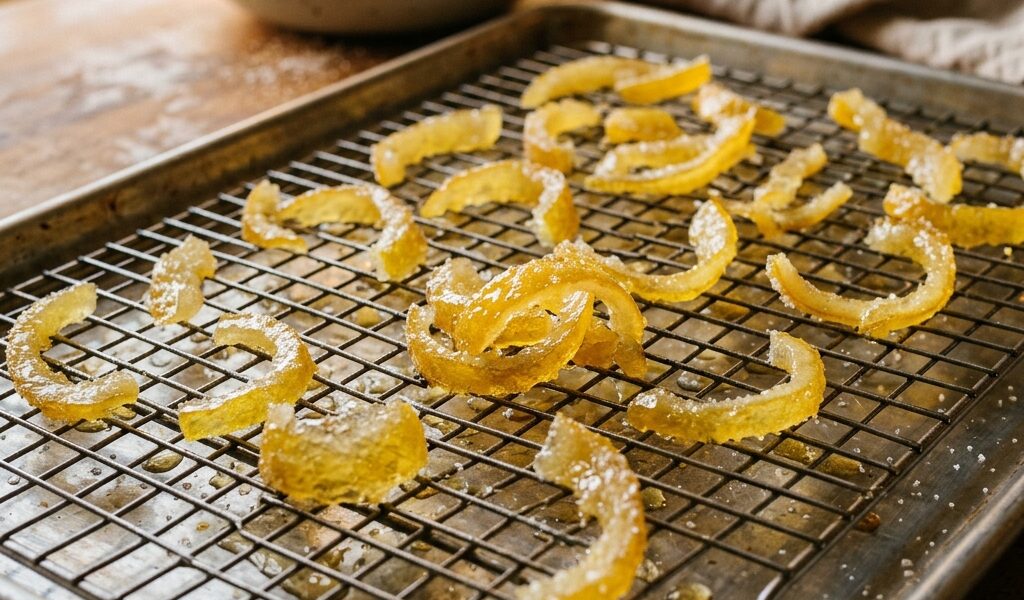
Candied lemon zests are the crown jewel of confectionery and fine pastry. Whether they scatter a travel cake, enrich a braided brioche, or top a modern entremets, they bring a soft texture, sweet delicacy, and concentrated aromatic explosion. However, store-bought industrial products are often disappointing: tough, overly sweet, saturated with preservatives (such as sulfur dioxide), and stripped of the citrus fruit’s true flavor. Making your own candied zest at home is the only way to achieve an exceptional result worthy of top chefs. Contrary to popular belief, this technique is not complex, but it requires scrupulous compliance with the thermal and chemical steps of candying to obtain translucent, melting peels free of unpleasant bitterness.
Candying is an ancestral preservation method based on a simple physical principle: replacing the water inside the fruit cells with a sugar syrup of increasing concentration. To succeed in this delicate operation on lemon zest, two major obstacles must be overcome: eliminating the excessive bitterness located in the white skin (the albedo) without destroying the structure of the zest, and preventing the sugar from crystallizing during cooling, which would make the peels hard and opaque. Using a rational approach based on culinary chemistry, we will detail the step-by-step recipe to guarantee your candied zests succeed every time.
Quick answer
The real chef’s recipe to successfully make candied lemon zest consists of peeling the citrus with a bit of the albedo (the white skin), blanching the zests three times in boiling water (renewing the water each time) to eliminate bitterness, and then poaching them at a very gentle simmer (between 80°C and 90°C) in a syrup made of equal parts water and sugar (1:1 ratio) for about 40 to 50 minutes until they become translucent. Adding a spoonful of lemon juice or liquid glucose halfway through cooking induces sucrose inversion, guaranteeing soft zests that will not crystallize during storage. Next, drain them on a wire rack before tossing them in sugar or conserving them in their cooking syrup.
Blanching three times is the indispensable step that is often neglected. Plunging the zests into cold water, bringing to a boil, draining, and repeating the process softens the cell tissues and dissolves the bitter compounds. The candying itself must then be done very slowly. A temperature that is too high would harden the zest before the sugar has time to penetrate to the core, while cooking too fast would caramelize the syrup and mask the lemon’s fresh aroma.
The Scientific Explanation
From a histological perspective, the lemon skin is divided into two parts: the flavedo (the outer colored layer containing volatile essential oils) and the albedo (the inner white spongy layer). The albedo is extremely rich in pectins, cellulose, and glycosylated flavonoids, principally hesperidin. Hesperidin is responsible for the intense bitterness of the citrus fruit. This molecule is moderately soluble in hot water. This is why repeated blanching is necessary: under the action of heat, the cell membranes of the albedo disorganize, allowing hesperidin to diffuse out of the plant tissue and be eliminated in the cooking water.
The candying process is governed by the laws of osmosis and diffusion. When the blanched zests are plunged into the sugar syrup, a concentration gradient is established. The external syrup has a sugar concentration (expressed in degrees Brix) far higher than that of the intracellular water of the zests. By osmotic pressure, water diffuses from the cells of the zest into the syrup to balance the concentrations, while sucrose molecules slowly penetrate the inside of the tissue to replace the lost water. If the syrup concentration is too high from the start, the exit of water is too violent, causing plasmolyse of the plant cells and irreversible shriveling of the zest. This is why we begin with a light syrup (1:1 ratio, which is about 50° Brix) and maintain a temperature of 80-90°C. Heat increases molecular agitation and the permeability of the pectocellulosic cell wall, accelerating sucrose diffusion without denaturing structural pectins.
Finally, the chemistry of sugar plays a crucial role in the final texture. Sucrose is a disaccharide made of glucose and fructose. During prolonged cooking in an acidic medium (thanks to the residual natural acidity of the lemon), sucrose undergoes acid hydrolysis called sugar inversion. This process splits sucrose into its two monomers: d-glucose and d-fructose. The resulting mixture, known as invert sugar, has a much higher solubility in water than sucrose alone. Moreover, the presence of glucose and fructose molecules prevents the orderly reassociation of sucrose molecules during cooling. This prevents recrystallization (the fact that zests become surrounded by a crust of hard white sugar) and ensures that the candied zests retain a permanently soft, glossy, and translucent texture.
Practical feedback
To develop this chef’s method, we conducted comparative tests in our pastry workshops, evaluating the effectiveness of different candying protocols on organic yellow lemon zests.
Our first test consisted of candying the zests without any prior blanching step, plunging them directly into a heavy syrup (70% sugar). The result was catastrophic. The zests shrank immediately, becoming extremely tough and dry under the effect of too sudden osmotic dehydration. Moreover, their bitterness was so pronounced that they were completely inedible. This test validated the absolute necessity of a rigorous and progressive blanching process.
In our second test, we blanched the zests three times and then cooked them in a 50% sugar syrup (1:1 ratio) kept at a gentle simmer. After 45 minutes, the zests showed beautiful translucency, indicating that the sugar had replaced the intracellular water uniformly. However, after two weeks of storage in a dry jar, the zests began to develop white sugar crystals on their surface, altering their visual appearance and flexibility in the mouth.
For the third test, we reproduced the protocol of the second test but added 10% glucose syrup (or a teaspoon of lemon juice) halfway through cooking. This time, after several weeks of storage at room temperature, the candied zests remained perfectly shiny, soft, and melting, without any trace of crystallization. Integrated into a lemon cake or a panettone, they kept all their softness after baking the cake, unlike commercial zests which tend to dry out and harden in the oven.
Conclusion
Successfully making candied lemon zest relies on mastering bitterness and sugar crystallization. By blanching your zests three times and adding an acidic element (or glucose) to trigger sucrose inversion, you will obtain professional-quality peels. Soft, fragrant, and translucent, your homemade candied zests will become the signature of excellence in all your pastries.